Technology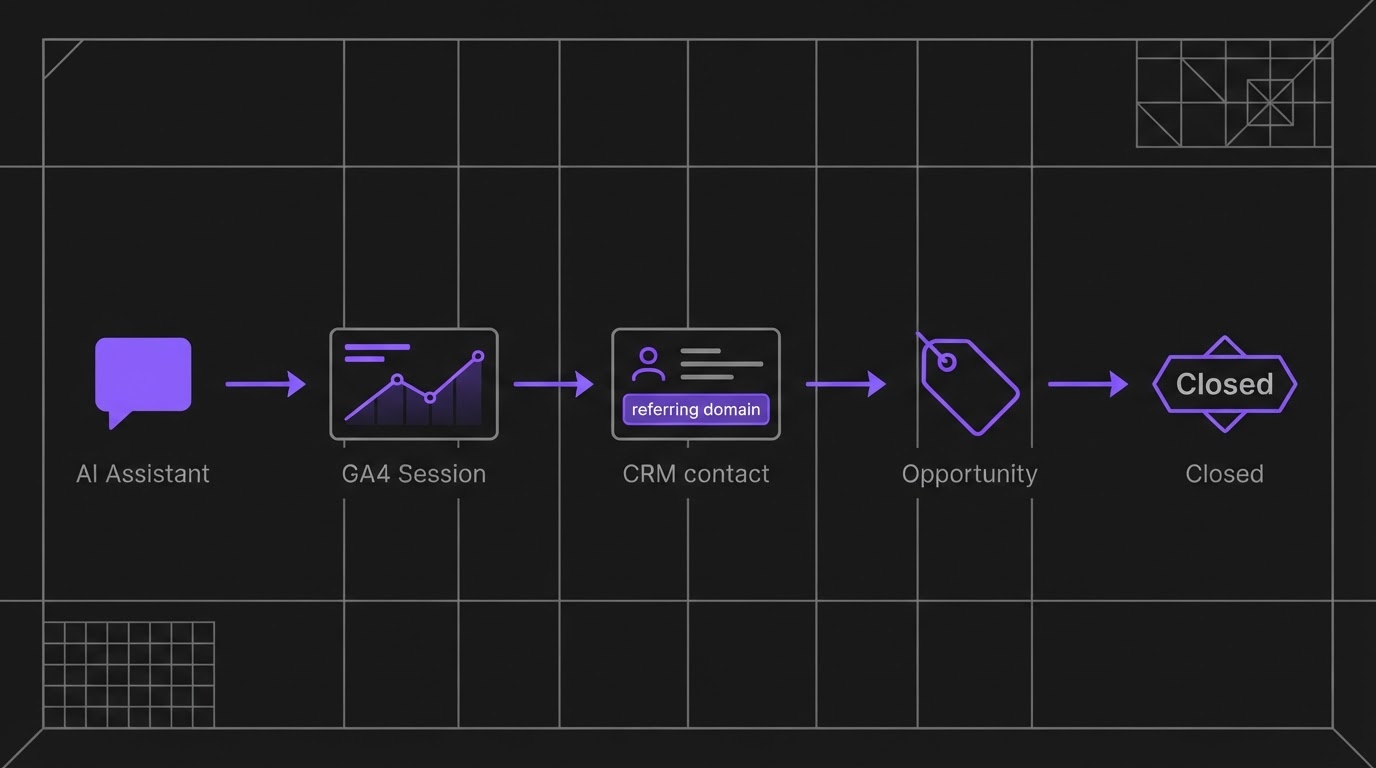
Does ChatGPT Traffic Actually Become a Customer? Tracking AI Referrals Into Your CRM
Google Analytics started labeling a slice of your traffic "AI Assistant" in May 2026. We have had three clients ask the same question since: is that traffic worth anything, or is it just a new box for numbers we already had. The honest answer took us into GoHighLevel's attribution fields, not just GA4's, and it is more complicated than either platform's documentation lets on.
This is the measurement half of a problem we already covered on the ranking side. Read the ranking half of this problem, which we already covered first if visibility is the question. This post is about what happens after the visit lands.
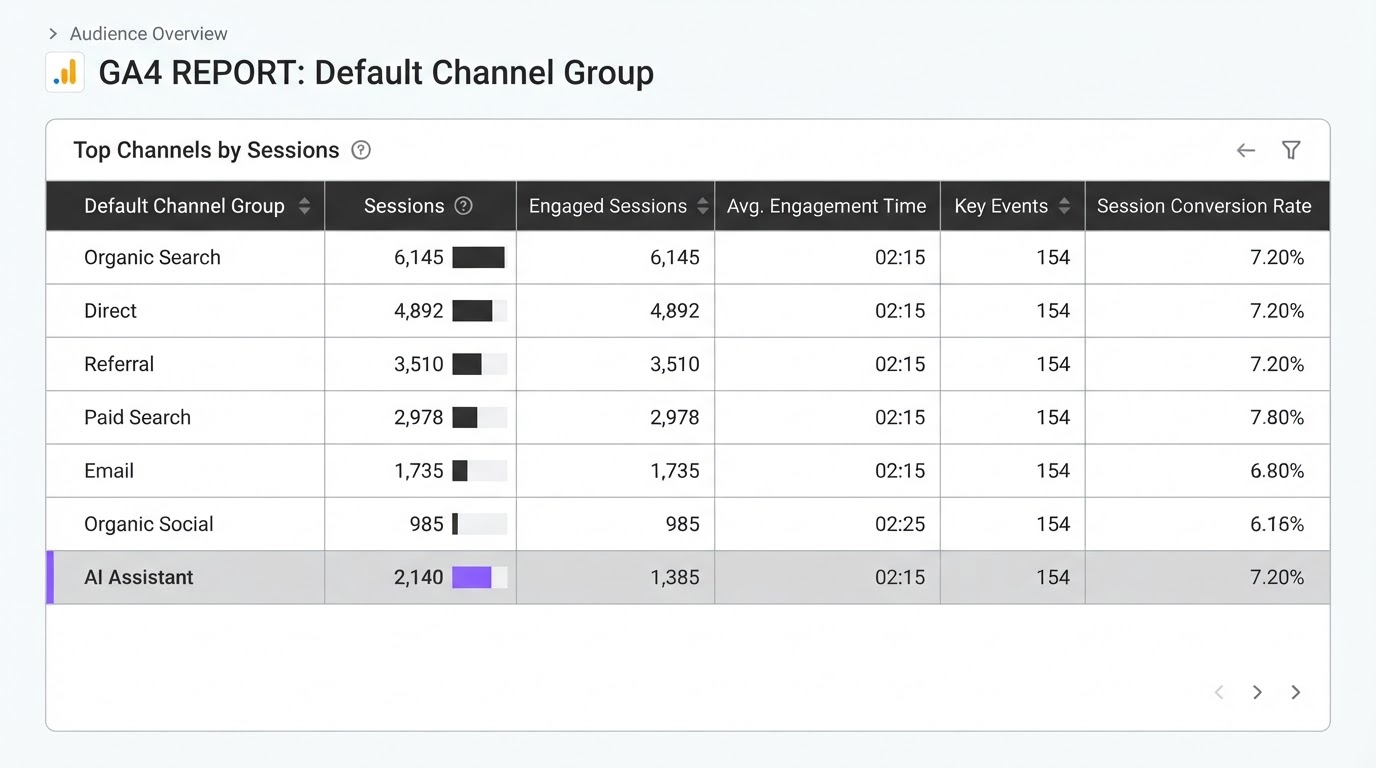
On 13 May 2026, Google Analytics added a dedicated AI Assistant channel to its Default Channel Group reports. Sessions arriving from ChatGPT, Gemini, and Claude now get tagged with an ai-assistant medium and an (ai-assistant) campaign value instead of falling into Referral or Direct, according to Google's own release notes.
Before this, the only way to isolate that traffic was a custom channel group built on a regex match against known AI domains, which Google's custom channel group documentation still lists for properties that have not picked up the new default: a pattern matching chatgpt, gemini, copilot, perplexity, and bard variants against the source and referrer fields. If your GA4 property predates May 2026 and you never rebuilt the channel grouping, you are probably still reading that traffic as Direct or Referral, and undercounting it.
Google has not published the full list of domains it recognizes under the new channel, so treat the AI Assistant number as a floor, not a total.
Sometimes, and it depends heavily on what you sell. The most detailed data we found came from an agency study covering 21 months of GA4 data across 100 ecommerce brands, published by Lawrence Hitches using StudioHawk's client data. ChatGPT referral sessions grew from about 8 a month in July 2024 to roughly 38,000 a month by early 2026, generating over 690,000 US dollars in tracked revenue across the panel. Aggregate conversion rate sat at 0.9 percent versus 1.2 percent for Google organic, but the category spread was wide: printer supplies converted at 8 percent, bridal at 0.01 percent. The average brand earned about 750 US dollars a month from the channel. One brand earned 120,000.
That study is ecommerce. Nobody we found has done the equivalent for lead generation and service businesses, which is most of who reads this. Search Engine Land's own 6.77 million session analysis of ChatGPT referral traffic, published in 2026, states plainly that "the next question is the one nobody has answered: conversion rate by LLM platform", and that piece had 19 months of session data behind it without ever closing that loop. If a publication with millions of tracked sessions has not answered it, a website getting a few dozen AI referred visits a month should not expect to answer it from a GA4 report alone.
That is not a reason to ignore the channel. It is a reason to stop measuring it in GA4 and start measuring it where the answer actually lives: your CRM.
Run the arithmetic before you build anything. If your site gets 40 AI referred sessions a month, at even a generous 3 percent conversion rate, you are looking at slightly over one lead a month from that source. A single client closing or not closing swings your "conversion rate" by 100 percent. That is not a trend, it is a coin flip with extra steps.
We have watched clients build entire dashboard sections for a channel producing single digit monthly events, then treat a two lead month as proof the channel works and a zero lead month as proof it does not. Neither read means anything at that volume. The honest threshold, in our experience running dashboards for clients across ecommerce, service, coaching, accounting, and technology, is that you need a channel to clear roughly 100 to 150 sessions a month before its conversion rate is worth a decision rather than a shrug.
If you are below that, the right move is to tag and store the data patiently, not to build a KPI around it yet.
This is the part every "how to track ChatGPT traffic" guide stops short of. A session count in GA4 tells you someone arrived. It does not tell you whether they filled out your form, became an opportunity, or paid you. For that, the AI Assistant channel has to reach your CRM, and GA4's session data alone cannot get there. It needs to travel with the visitor.
GoHighLevel stores UTM source, medium, campaign, and content on every contact, plus click IDs like gclid and msclkid, and it records both a first touch and a latest touch attribution snapshot per HighLevel's own attribution documentation. First attribution never changes after the first interaction. Latest attribution updates on every new session.
Here is where it gets honest: GoHighLevel does not have a native "ai assistant" medium the way GA4 now does. There is no vendor maintained list mapping chatgpt.com or perplexity.ai to a clean source label inside the CRM. GHL will bucket that visit by whatever referring domain or UTM value actually arrives with the click, the same way it always has.
Most AI assistants that surface a link do pass a referrer, which GHL can capture as a referring domain. But a meaningful share of AI assisted browsing does not: a user reading an answer inside a native app, or copying a URL out of a chat and pasting it into a new tab, arrives with no referrer at all. GA4 has the same failure mode for the exact same reason, which is why the AI Assistant channel is a floor and not a ceiling. Assume your CRM's count of AI referred contacts is undercounted, not wrong.
The workable setup we use: build a custom field on the contact record for "referring domain," populate it from the tracking script's captured referrer at first touch, then build a saved smart list or a tag rule filtering that field against the known AI assistant domains, chatgpt.com, perplexity.ai, gemini.google.com, claude.ai, copilot.microsoft.com. Tag every match. This is the same tagging discipline behind how we route form leads in GoHighLevel and keeping a CRM usable. From there the CRM does what it is actually good at: showing you what percentage of that tagged group became an opportunity, and what percentage of opportunities closed. That is the number GA4 was never going to give you.
Do not build a UTM parameter and expect an AI platform to preserve it. You do not control the link ChatGPT or Perplexity generates when it cites your page, so anything you add manually gets stripped or ignored on their end. Referrer matching, imperfect as it is, is the only lever you actually have.
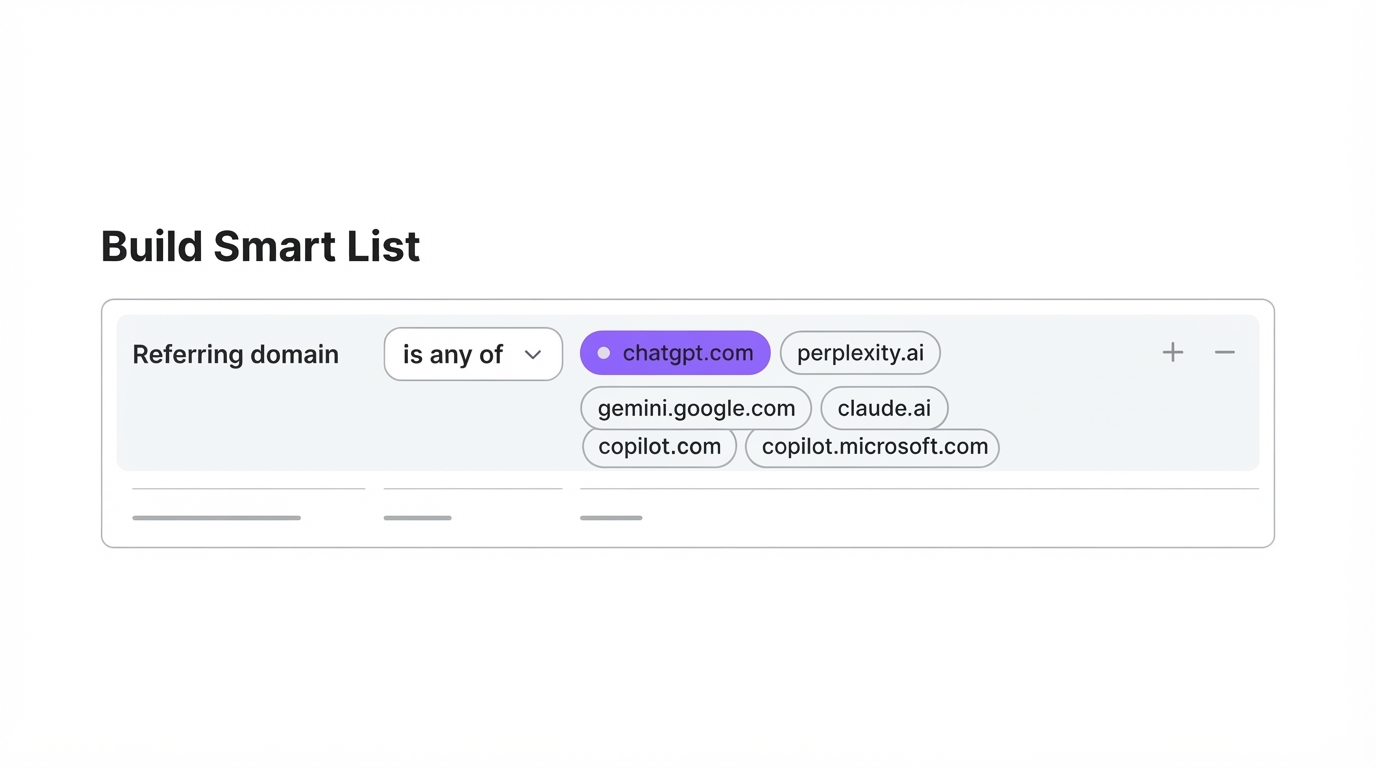
Four steps, in order, none of which need a developer:
The AI Assistant channel is real, it is new, and it is genuinely useful once it reaches your CRM instead of stopping at a GA4 report. Most of what gets published about it stops at the tracking setup and calls that the answer. The actual answer, whether it becomes a customer, only shows up once you can see the tag all the way through to a closed deal, and for most small businesses that will take a few months of patient tagging before the number says anything at all.
If you have connected this differently, or found a cleaner way to catch the sessions GA4 and GHL both drop into Direct, we would like to compare notes. This is still a young enough problem that nobody's setup is finished. The same argument applies to building custom dashboards around systems over disconnected tools: the data has to land somewhere you can act on it, not in a report nobody opens.
If your GA4 and your CRM are not talking to each other yet for any traffic source, not just this one, book a strategy call. We will map what you have now and where the handoff is leaking.
No, not anymore. Since 13 May 2026, GA4's default channel grouping separates AI Assistant traffic from Organic Search into its own category with an ai-assistant medium. Before that update, and on properties that have not rebuilt their channel groups, this traffic often landed in Referral or Direct instead.
Most commonly because the visit arrived without a referrer header, which happens when someone reads an answer inside a native AI app or copies a link into a new tab rather than clicking through. Both GA4 and CRM platforms rely on the referrer to attribute the session, so a missing referrer defaults to Direct in both systems.
Not usefully. You do not control the links an AI assistant generates when it cites your page, so any UTM parameters you add to your own URLs are not preserved by the platform. Referrer domain matching is the reliable option, with the caveat that it undercounts sessions with no referrer at all.
It varies enormously by what you sell. A 21 month study across 100 ecommerce brands found an aggregate 0.9 percent conversion rate against 1.2 percent for Google organic, with categories ranging from 0.01 percent to 8 percent. No equivalent study exists yet for lead generation or service businesses, and most small business sites lack the AI referred volume to make their own rate meaningful.
As a working threshold, look for roughly 100 to 150 sessions a month in the channel before treating its conversion rate as a real signal rather than noise. Below that, a single closed or lost deal can swing the percentage by double digits, which tells you nothing about the channel itself.
GOOGLE PREFERRED SOURCES
Add BDGS Digital as a Preferred Source in Google and make our latest SEO, CRM, automation, advertising, AI, and marketing technology insights easier to discover.
Add BDGS Digital
Written by
Benison David Sanchez is the CEO and AI Digital Marketing Strategist of BDGS Digital, a technology, CRM, automation, and growth company based in the Philippines and serving clients globally. He leads digital marketing and client acquisition for the company, and over five years has worked with more than 100 businesses across ecommerce, service, coaching, accounting, and technology, building connected growth systems where every campaign ties back to a larger system rather than running in isolation. He writes about what those builds actually look like, including the parts that are still half figured out.
View all articles by BenisonWant help building this?
BDGS Digital builds connected growth systems across CRM, automation, marketing, and technology. Explore our services or book a strategy call.
Book a Strategy CallLET'S TALK
Book a strategy call and we'll map how your CRM, automation, marketing, and technology can work together as one connected system.