AI & Automation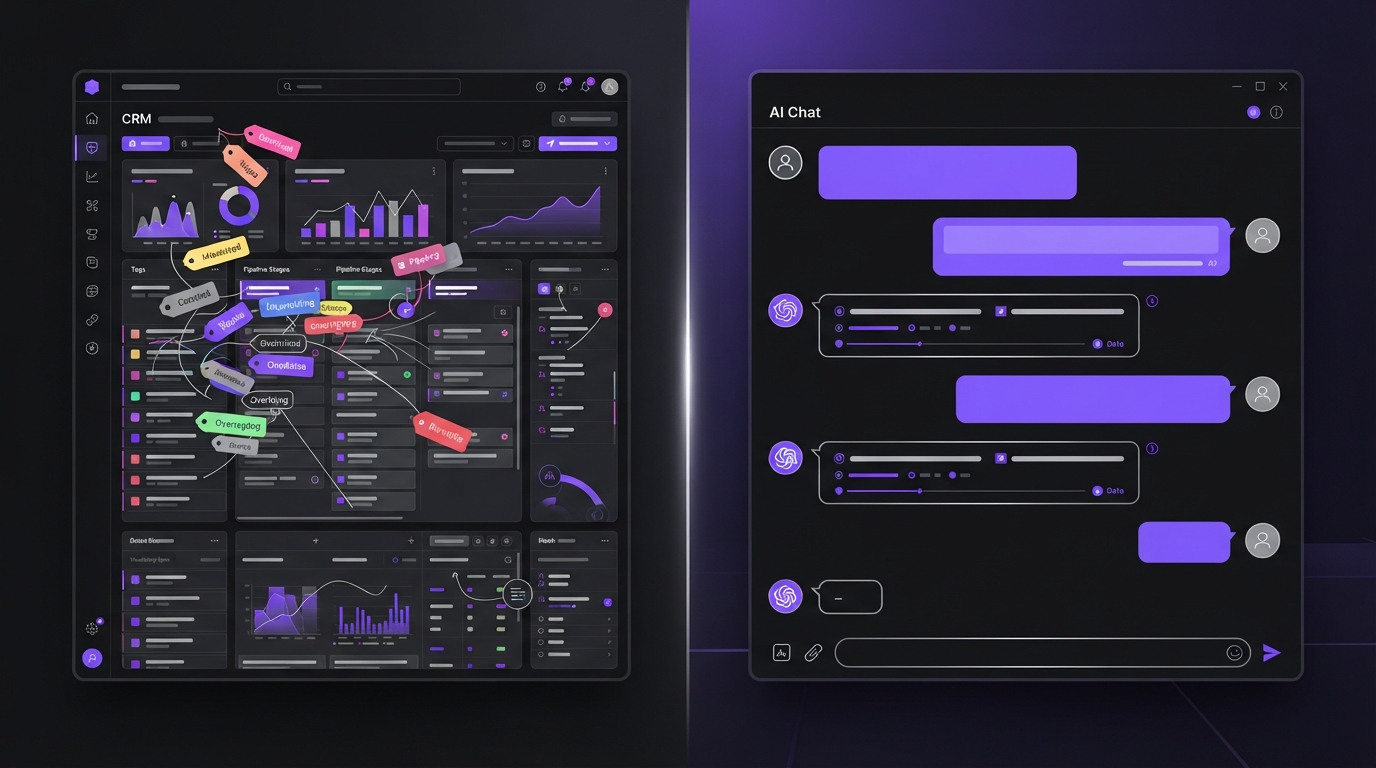
Why Most Small Businesses Aren't Ready for AI Sales Agents
Most small businesses should not hand a live sales conversation to an AI agent right now. Not because the technology cannot do it. Because almost nobody has finished the unglamorous work an agent needs before it can be trusted with a lead: a documented process, clean CRM data, and a clear line for when the agent has to stop and hand off to a human.
Gartner surveyed more than 3,400 organizations already investing in agentic AI in early 2025 and still forecasts that more than 40 percent of these projects will be canceled by the end of 2027. The reasons the firm gave were not model capability. They were escalating costs, unclear business value, and inadequate risk controls, the exact problems a five-person agency can run into as fast as a Fortune 500 company, just with a smaller budget to absorb the mistake. You can read the full Gartner press release here.
If your business is still building its lead generation and follow-up process by hand, adding an autonomous agent on top of that foundation is like installing a smart thermostat on a house with no insulation.
We would be lying if we said the pitch has no substance. Around 79 percent of organizations report some level of agentic AI adoption in 2026, and roughly 75 percent of B2B sales organizations expect to run some form of AI-driven sales development by the end of the year, according to a 2026 industry benchmark report from Laxis. Small and mid-sized businesses lose more than 126,000 dollars a year on average to calls nobody answers, with about 62 percent of incoming calls going unhandled and after-hours misses running close to total, according to a 2026 review of AI phone agent deployments by Beancount. An agent that never sleeps and never forgets to follow up is a genuine advantage for a business that cannot afford a second salesperson.
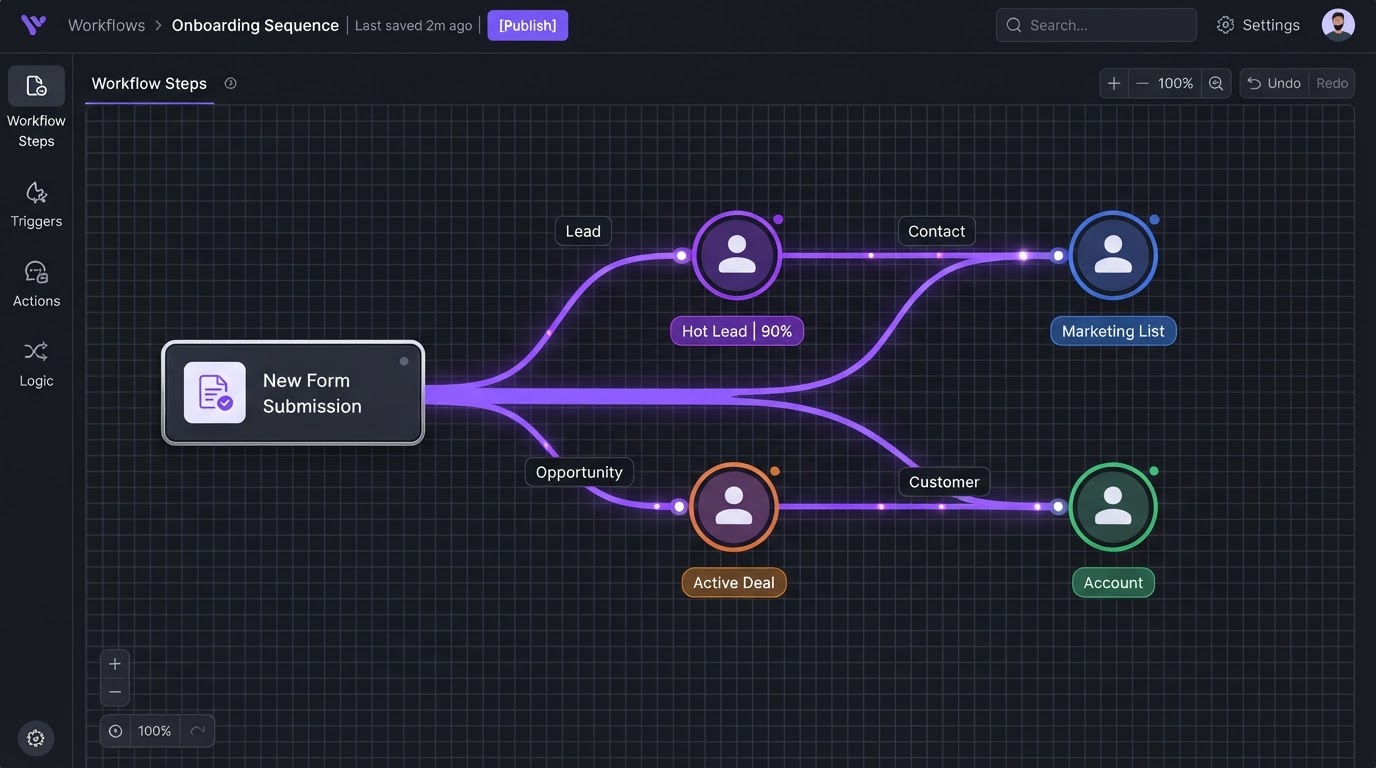
We have built exactly this kind of system for clients, wiring automation workflows so a form fill fires a tag, the tag routes the lead, and a sequence follows up before the prospect has closed the browser tab. When it works, it is close to the best thing this industry has to offer a business owner who is also answering the phone.
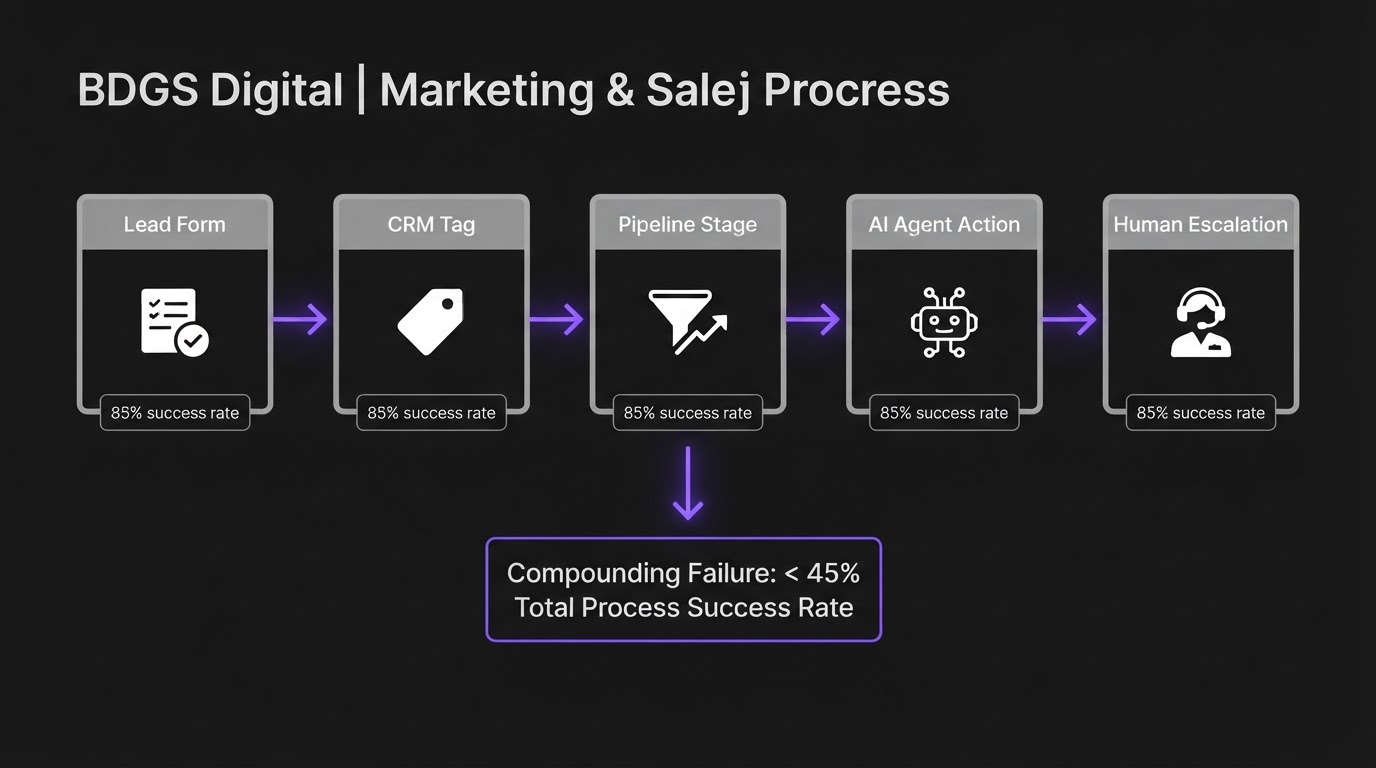
Where it breaks, in our experience, is almost never the model. It is the pipeline underneath it.
Most sales workflows we get called in to fix start the same way: a lead form that feeds a spreadsheet three different people update by hand, in three different formats, with pipeline stages nobody agreed on in writing. Before we can wire in anything that represents the brand in a live conversation, we usually spend most of the engagement just making the lead stages consistent enough for a workflow to read them without guessing. That part never makes it into a vendor's demo video.
We have shipped a version of this mistake ourselves. An early workflow we built left a default field value unchanged, so every new lead landed in the pipeline tagged as ready to close regardless of what the intake form actually said. It took the sales team the better part of a week chasing dead ends before anyone traced it back to that one field.
That pattern shows up everywhere once you look for it. A 2025 Gartner AI Implementation Survey, cited in a 2026 review by Builts.ai, found that 62 percent of underperforming AI support projects trace back to insufficient data preparation, not the underlying technology. Laxis names broken CRM write-back as the single most cited cause of AI sales agent underperformance: when an agent's activity does not reliably land in the CRM, reps stop trusting it, start double-entering data, or route around the tool entirely, and return on investment depends on people actually using what was built. This is why we insist on CRM management that keeps data clean before any automation touches it.
There is also a compounding problem that gets worse the more autonomous the agent becomes. If a workflow needs eight sequential steps done correctly and each step succeeds 85 percent of the time on its own, the odds of the full chain landing correctly fall to roughly 27 percent, a pattern documented in a 2026 review of agent reliability by Inovabeing. A qualification agent that has to read the lead, check the calendar, confirm budget, and log the outcome is exactly this kind of chain. Most small businesses do not have the call volume to notice these failures piling up. They just notice the pipeline looks fuller than it converts.
None of this means wait a year and try again later. That is its own expensive mistake. Businesses already running AI sales agents report first-year returns in the 300 to 500 percent range when utilization stays above 75 percent, with payback in 9 to 12 months, according to Laxis's 2026 benchmark data. That return does not exist for a business that never turned anything on.
The honest split is narrower than most vendors want to admit. Scoped, low-stakes agents already earn their keep: an after-hours receptionist answering hours, pricing, and availability, a chatbot resolving 55 to 70 percent of tier-one questions before a human ever sees them, a workflow that drafts a follow-up for a rep to approve rather than sending it unsupervised. PwC's 2025 AI Agent Survey found executives trust agents most with data analysis and internal collaboration, at 38 and 31 percent respectively, and trust drops hard, to 20 and 22 percent, for financial transactions and autonomous interactions with people outside the company. That gap is not a technology problem. It is executives correctly pricing in what happens when an unsupervised agent gets a live human interaction wrong.
If an AI agent vendor is already in your inbox this week, the move that actually protects you is sequencing, not saying no.
Most of that list has nothing to do with AI. It is the same operational groundwork that would have made a new human hire more effective too. The agent just makes the absence of it visible faster, and more publicly, because it will say the wrong thing to a real prospect at a scale one overwhelmed employee never could. The same evidence-led discipline applies to search: see the AI Overviews checklist for what Google actually requires before you invest in the newest layer.
We could be wrong about the timeline. If you have already handed a full sales conversation, not just qualification, to an agent and it held up, we want to know what made it work. Every business we have seen do this well seems to share the same unglamorous secret: they automated the process before they automated the person having it.
If you are trying to connect your CRM, follow-up, and ads into one system and it keeps breaking at the handoff, book a strategy call. We will map what you have now and where it is leaking.
Yes, for scoped tasks like appointment booking, FAQ answers, and drafting follow-ups a person approves. The risk is handing over full, unsupervised sales conversations before the CRM data and process behind them are clean enough for an agent to read correctly.
Broken CRM write-back and inconsistent lead data, not the AI model itself. Gartner and industry CRM surveys both point to preparation and governance gaps, not the underlying technology, as the leading cause of stalled or canceled agentic AI projects in 2026.
You are close to ready if you can write out your sales process step by step, your CRM stages are accurate for most current leads, and a specific person is assigned to review the agent's outputs weekly. If any of those is missing, fix it first.
Not entirely. Start with a low-stakes, scoped agent now, such as an after-hours receptionist or FAQ handler, while you fix your process and data in parallel. Waiting for perfect reliability just means missing groundwork you need before a bigger deployment anyway.
Not yet. PwC's 2025 survey found executive trust in autonomous agent-led interactions sits around 22 percent, far below trust in data analysis tasks. Treat agents as support for a rep's process, not a replacement for the judgment a live conversation still needs.

Written by
Benison David Sanchez is the CEO and AI Digital Marketing Strategist of BDGS Digital, a technology, CRM, automation, and growth company based in the Philippines and serving clients globally. He leads digital marketing and client acquisition for the company, and over five years has worked with more than 100 businesses across ecommerce, service, coaching, accounting, and technology, building connected growth systems where every campaign ties back to a larger system rather than running in isolation. He writes about the sequencing question most vendors skip: what has to be true before automation is safe to turn loose.
View all articles by BenisonWant help building this?
BDGS Digital builds connected growth systems across CRM, automation, marketing, and technology. Explore our services or book a strategy call.
Book a Strategy CallLET'S TALK
Book a strategy call and we'll map how your CRM, automation, marketing, and technology can work together as one connected system.