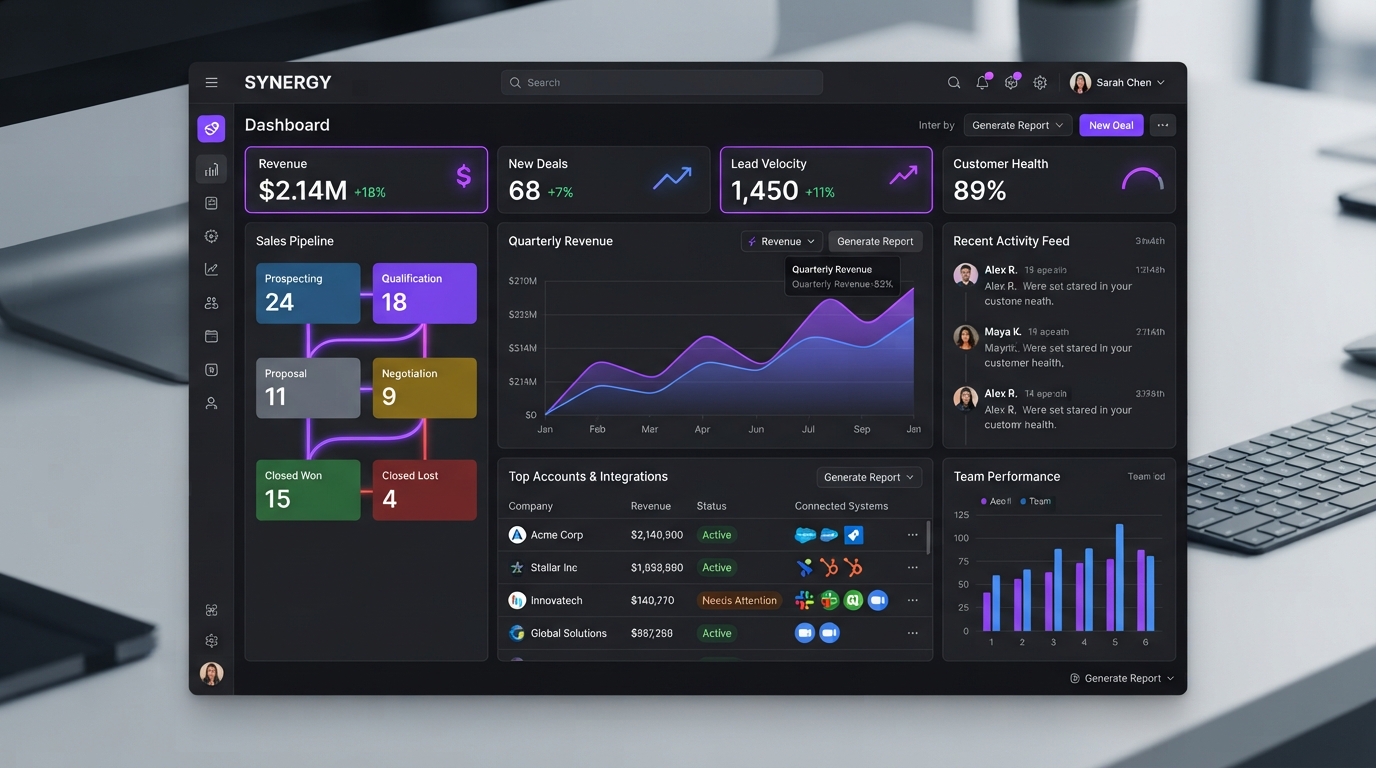
The problem with disconnected tools
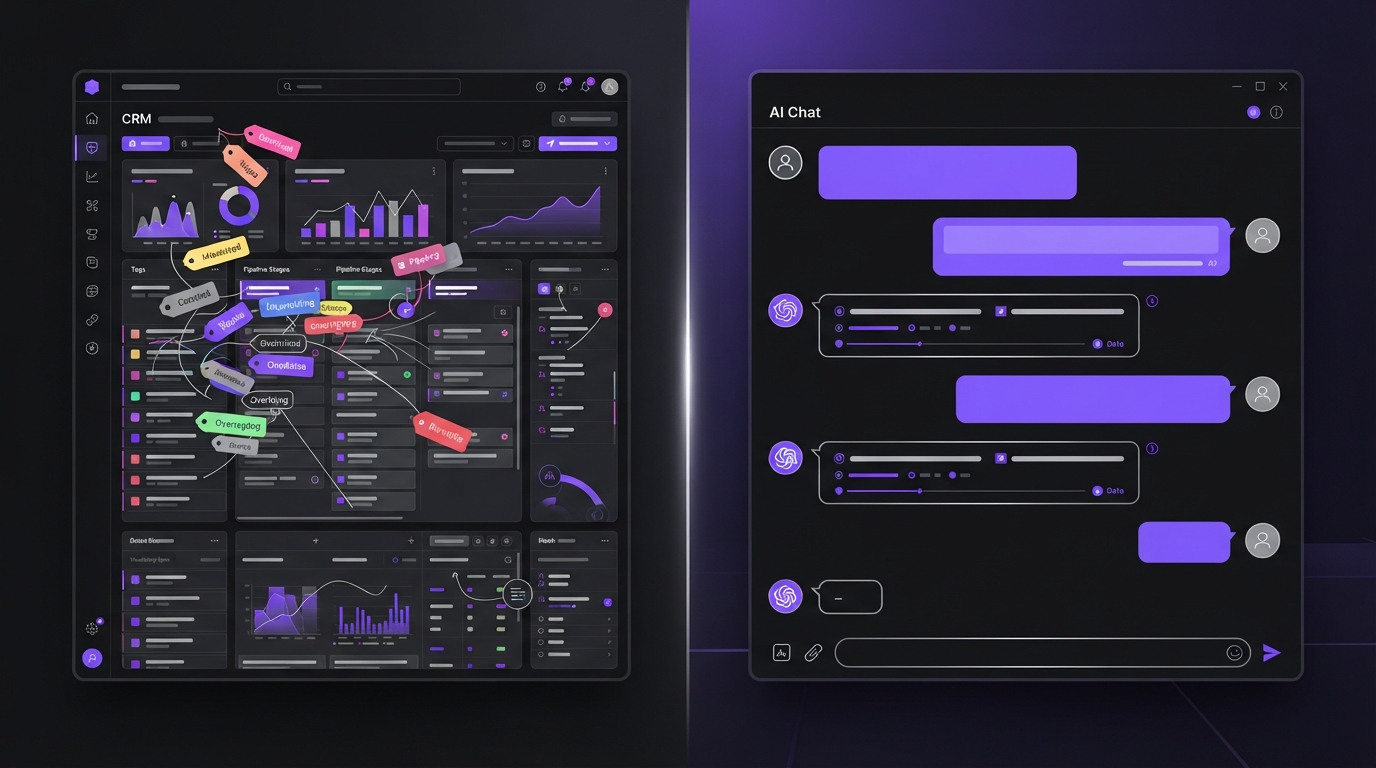
Most businesses accumulate tools faster than they connect them. A CRM lives in one tab, an email platform in another, ad accounts somewhere else, and reporting is stitched together with spreadsheets at the end of each week.
The result is friction. Data gets entered manually in multiple places. Leads fall through the cracks because handoffs depend on people remembering to follow up. Reporting takes hours and no one fully trusts the numbers when they arrive.
When tools don't share data, your team spends more time managing software than serving customers. That's the real cost of disconnected systems, and it grows as the business grows.
What connected actually means
A connected growth system shares data across tools, triggers workflows automatically, and reports into one unified view. Marketing, sales, and operations stop working in silos and start working as one coordinated system.
When a lead fills out a form on your website, that lead is captured in your CRM, routed to the right person, enrolled in a follow-up sequence, and tracked through to conversion, all without manual intervention.
Connection doesn't mean buying one giant platform. It means making your existing tools talk to each other through integrations, automations, and a clear data architecture that defines how information flows between them.
The five layers of a connected growth system
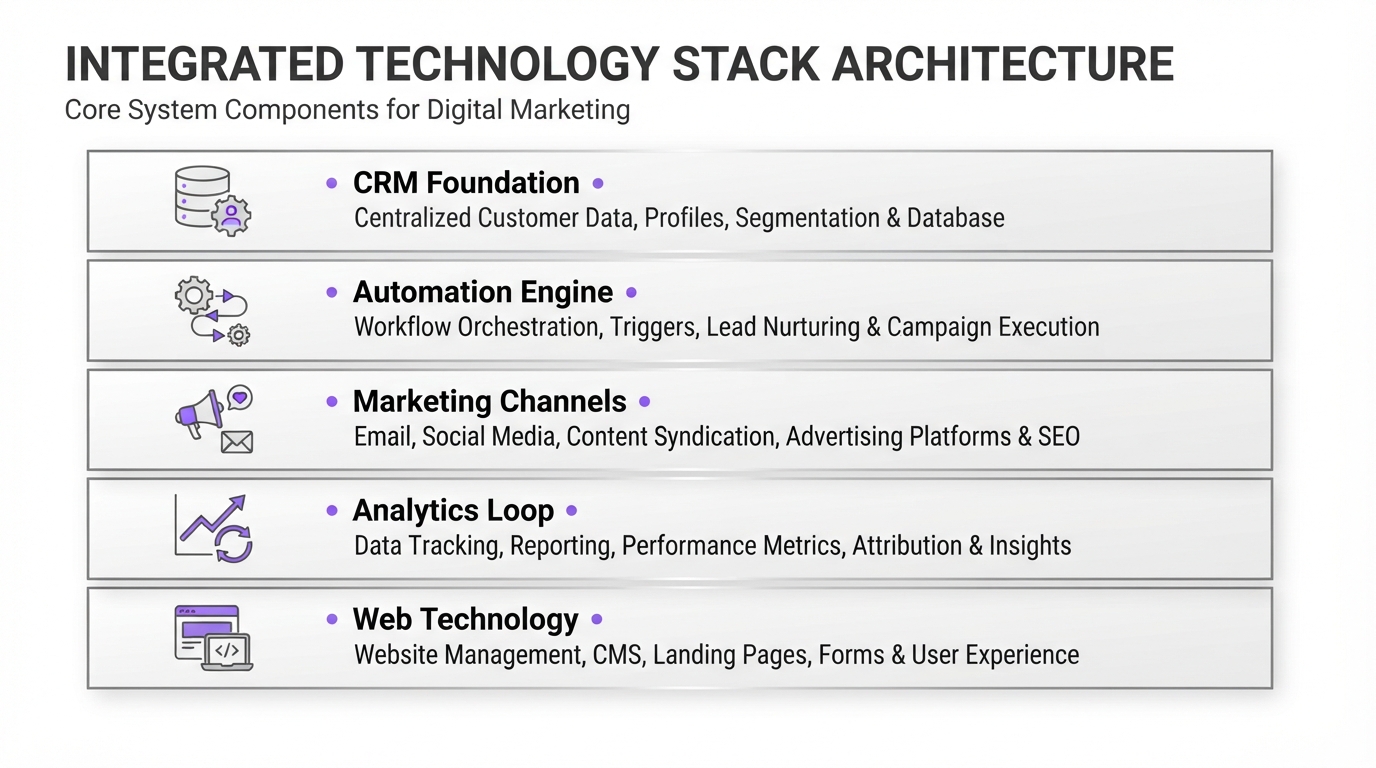
A connected growth system is built on five layers: CRM as the foundation, automation as the engine, marketing as the acquisition channel, analytics as the feedback loop, and web technology as the front door.
CRM holds your customer data and relationships, and strong CRM management keeps that data clean enough to act on. Automation connects tools and runs repeatable workflows. Marketing brings in new prospects. Analytics tells you what's working, often surfaced through a custom dashboard. Web technology captures and converts visitors.
Each layer is powerful on its own, but the value compounds when they're connected. CRM data informs marketing targeting, and how CRM marketing integration actually works, field by field, is what makes that connection reliable. Automation connects marketing to sales. Analytics measures the whole system and feeds insights back in.
Why it matters for predictable growth
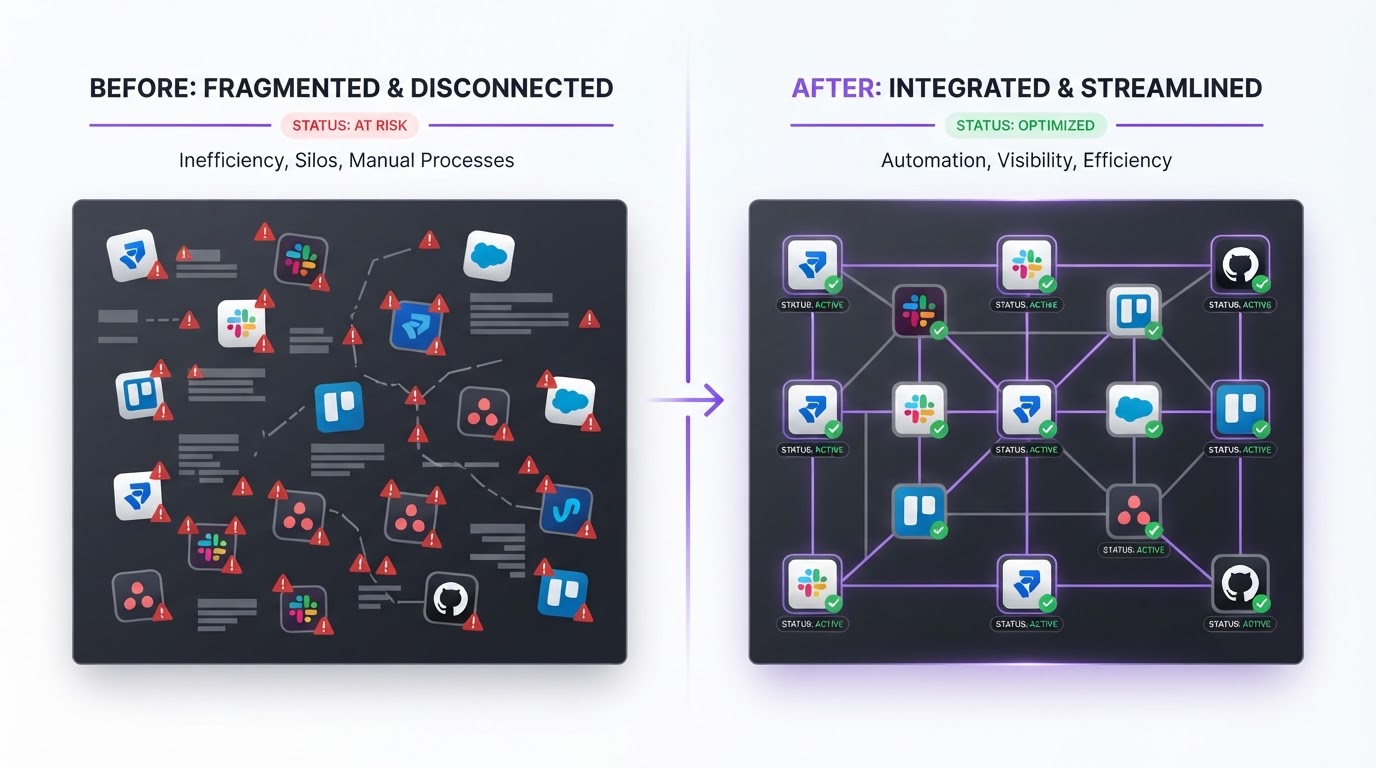
When systems are connected, growth becomes something you can engineer rather than hope for. You can see what's working, automate the repetitive parts, and scale what produces results.
Disconnected businesses grow in spikes and stalls. Connected businesses grow in a more predictable line because every part of the system supports the others. A lead generated by marketing is captured, followed up, and tracked to revenue without gaps.
That visibility is what makes scaling possible. You can't scale what you can't see, and you can't improve what you can't measure. A connected growth system gives you both.
How to get started
Start with an audit of your current tools, data, and workflows. Identify where information is getting stuck, where manual handoffs are creating delays, and where reporting is unreliable.
Then prioritize the connections that will have the biggest impact. Often that means connecting marketing to CRM first, so leads are captured and followed up. From there, layer in automation, dashboards, and reporting. If you want to see how BDGS Digital approaches this end to end, our digital marketing and automation services guide walks through the full system.
You don't need to connect everything at once. Build incrementally, measure the impact of each connection, and expand from there. The goal is a system that grows with your business, not one that breaks under it. If you want help mapping where your current setup is leaking, book a strategy call and we will walk through it with you.
Want help building this?
BDGS Digital builds connected growth systems across CRM, automation, marketing, and technology. Explore our services or book a strategy call.
Book a Strategy Call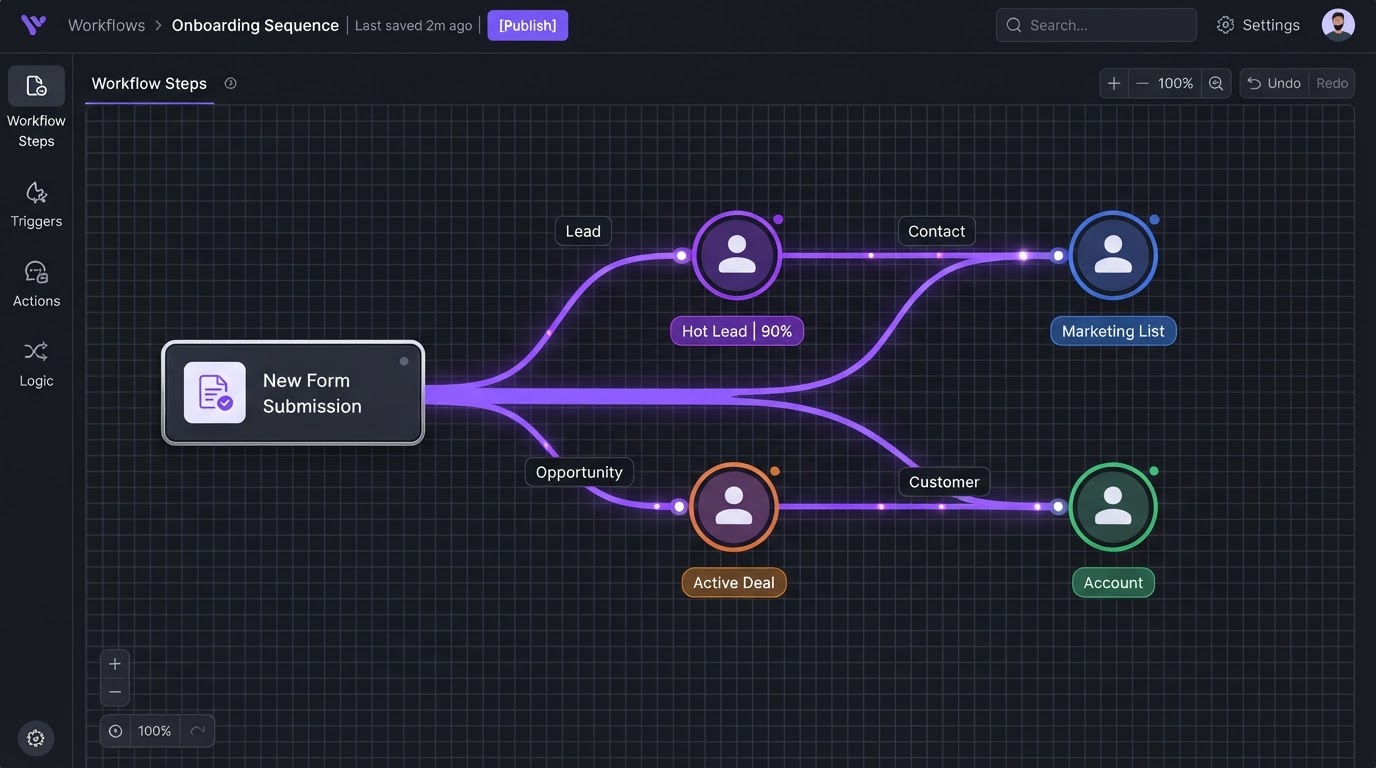
LET'S TALK
Ready to Build a Smarter Growth System?
Book a strategy call and we'll map how your CRM, automation, marketing, and technology can work together as one connected system.