What do the 2026 Google Ads benchmarks actually say?
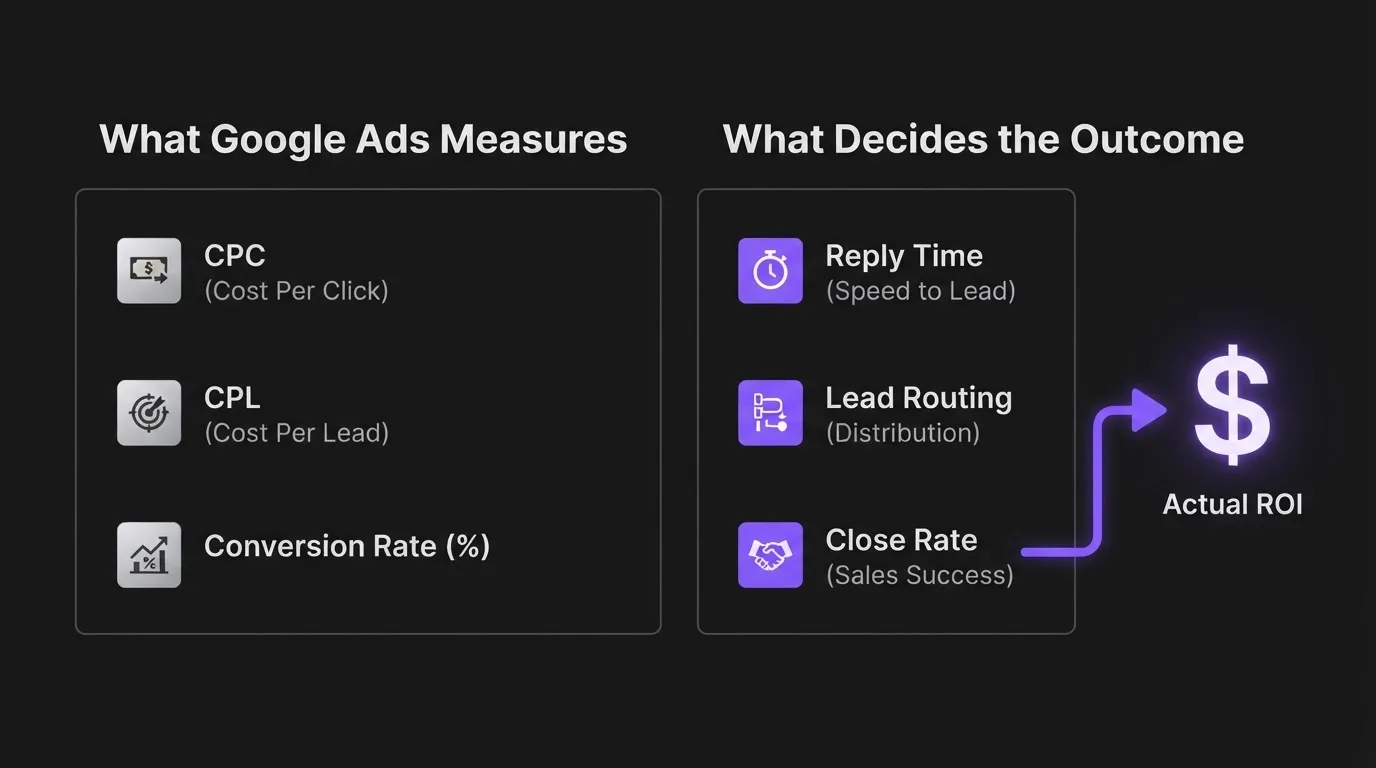
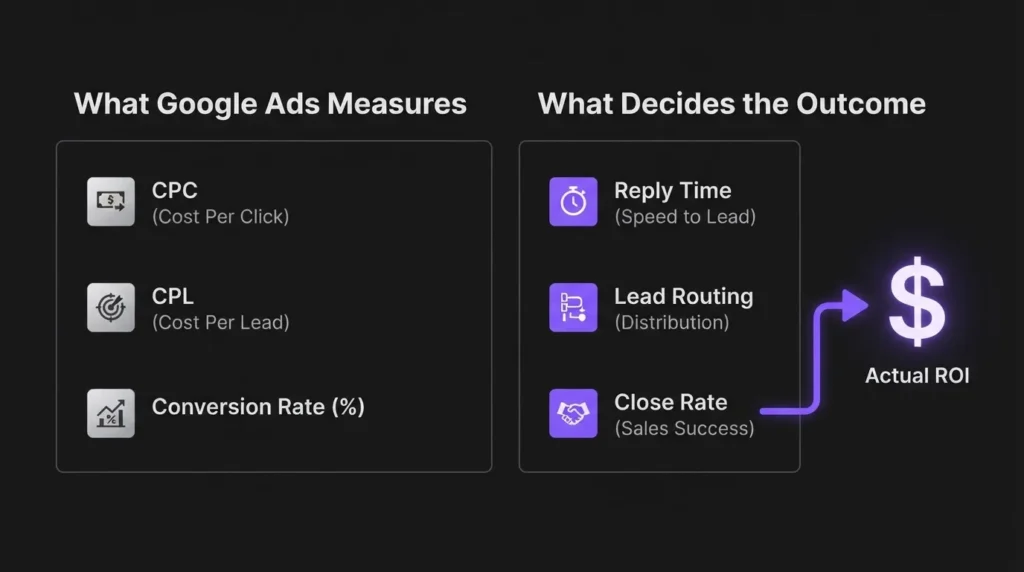
Type “is Google Ads worth it” into Google and you land on a number: $66.69, the current average cost per lead. We have run Google Ads accounts professionally for years, and here is what almost none of those benchmark pages ask next: worth it compared to what happened to that lead after it landed. That is the part that actually decides the answer, and it is the part the $66.69 figure cannot see.
The most current dataset available is WordStream and LocaliQ’s 2026 Google Ads benchmarks report, built from 13,474 US search campaigns running between April 2025 and March 2026. The overall averages: $5.42 cost per click, $66.69 cost per lead, and an 8.18 percent conversion rate, with wide swings by industry.
Those numbers are real and they are useful for a budget conversation. But read the fine print, and the report’s own contributors flag the limit themselves: “cost per lead is an important in-platform metric, but it’s even more important to track search leads to the down-funnel pipeline and revenue. High lead volume means nothing if those leads aren’t converting into revenue.” That sentence is buried in a benchmark report that most people screenshot for the CPL number and never read past.
Worth noting too: Google’s own definition of a conversion is whatever action you tell it to count, a purchase, a sign-up, or a phone call. A “conversion” in that $66.69 figure is a lead. It is not a customer, and it is definitely not a fast reply.
Why do the “clicks but no leads” guides never mention what happens after the form?
We read through the current top-ranking diagnostics for Google Ads accounts that spend money and generate few leads. One lists seven causes: low buying intent keywords, ad copy and landing page mismatch, slow landing pages, weak calls to action, missing negative keywords, broken conversion tracking, and targeting that is too broad. Another lists nine, adding funnel design, audience research, and creative quality.
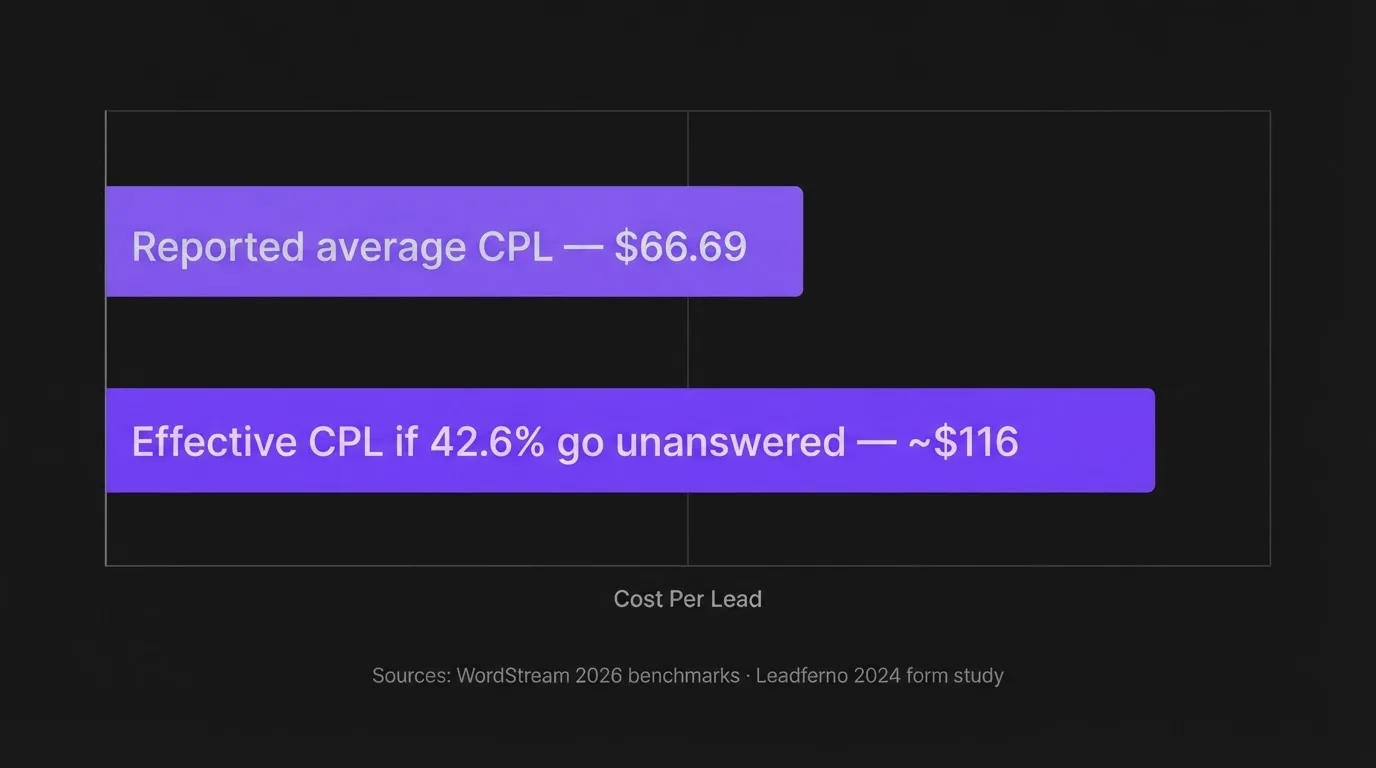
Between the two lists, sixteen distinct causes. Not one mentions what happens to the lead once the form is actually submitted. Every cause sits upstream of the click. That is a real gap, and it is not a small one, because the research on what happens downstream already exists and it is not flattering. A 2024 study by Leadferno tracked 225 small business contact forms across home service, professional service, and medical practices, all ranking in Google’s local top 10. Forty two point six percent of those forms never got a single reply. The ones that did averaged 17 hours and 49 minutes before the first response.
Run that math against the benchmark. If a campaign hits the $66.69 average cost per lead and 42.6 percent of those leads never get a reply, the cost per lead that actually reaches a conversation works out closer to $116, not $66.69. No keyword audit fixes that, because the leak is not in the campaign.
What actually decides whether the ad spend pays off once the lead lands in your CRM?
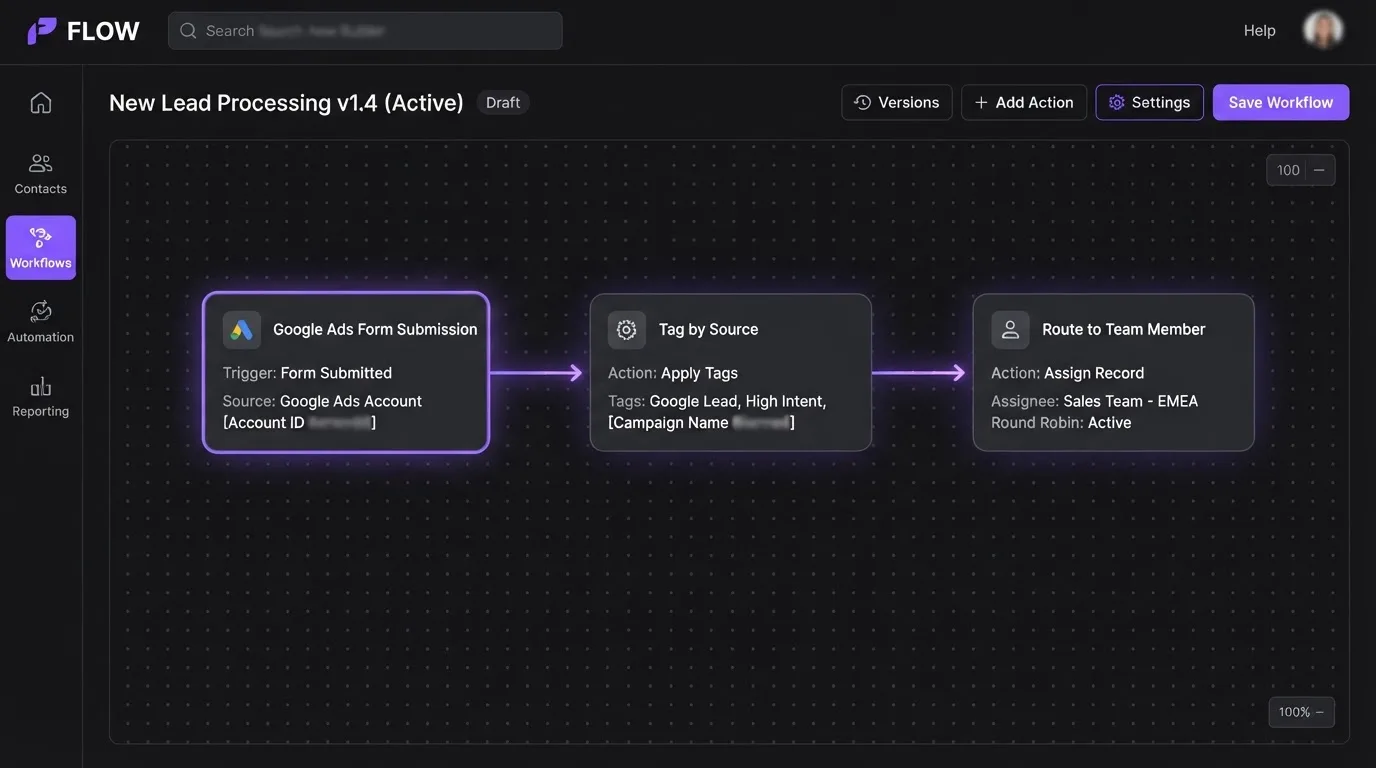
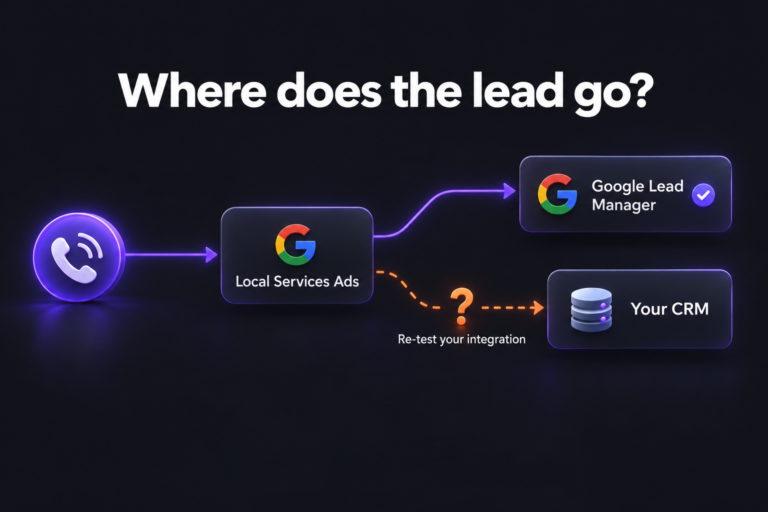
We manage Google Ads management for clients and, separately, we build the automation layer those leads land in, so we see both halves of the same account more often than a pure ad shop does. The pattern repeats: two businesses in the same industry, running near identical search campaigns, similar budgets, similar keywords, similar CPL. One routes the form submission straight into a tagged workflow that pings the assigned person’s phone within minutes and fires an automatic first reply while they get to it. The other drops it into a shared inbox that gets checked once in the evening, sometimes not until the next morning.
Same ad spend. Same targeting. Same CPL on the Google Ads dashboard. Wildly different outcome, because the ad account was never the variable that mattered most.
We have made this mistake ourselves. Early on, we handed a client a campaign that hit its target cost per lead and reported it as a win, without checking how fast their own team was actually answering the phone. It took us a full quarter to notice their close rate had not moved at all, because we were watching the platform’s metrics instead of the pipeline. We do not run a Google Ads account in isolation anymore. The routing and reply speed get checked in the same review as the CPC.
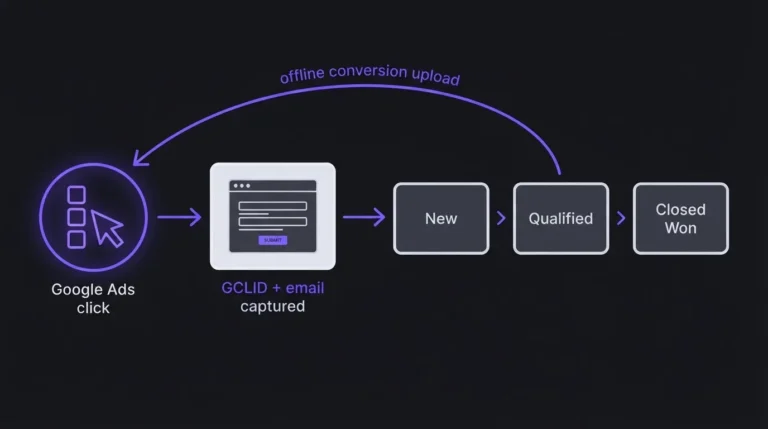
Lead volume that never becomes revenue is also the problem offline conversion tracking exists to solve. If Google Ads is bidding on form fills while your CRM quietly closes only a fraction of them, the fix is to send qualified leads back to Google Ads and let Smart Bidding optimize for those instead.
If you already have a workflow that tags a lead by source and assigns it the moment it lands, we wrote up how we route form leads in GoHighLevel in an earlier post. We have made almost the same point about tracking a lead’s true source all the way into the CRM in our piece on tracking AI referral traffic into a CRM, and the logic transfers directly to paid search. If you do not have that routing built yet, building it is worth doing before increasing ad spend, not after.
Does Performance Max make this worse?
Performance Max used to be a genuine black box, and a lot of the skepticism about it is inherited from that era. Google’s January 2025 updates added channel performance reporting, campaign level negative keywords, and search term insights, so you can now see which surface, Search, YouTube, Display, Discovery, Gmail, or Maps, actually produced a given conversion. That is real progress.
None of it changes the argument here. Better visibility into which channel produced the lead still stops at the same wall: a conversion event, not a customer. A Performance Max campaign with excellent channel reporting and a slow follow-up process has the same problem as a Search campaign with excellent channel reporting and a slow follow-up process. The extra reporting tells you more about where the lead came from. It tells you nothing about what your team did with it in the next ten minutes.
So is Google Ads worth it?
For most small businesses we have worked with, yes, and the CPC and CPL numbers in the 2026 benchmark data back that up for most industries. But “worth it” is the wrong question to answer with a platform metric, because the platform cannot see the part of the funnel that decides the outcome. The right question is whether your business can reply to a new lead in minutes rather than hours, because that is what the $66.69 average cost per lead is actually buying you: a shot at a conversation, not a guaranteed one.
This is the same argument we keep making about a connected growth system: the ad account and the CRM are one system with one outcome, not two separate scorecards. We think most agencies avoid saying this out loud, because it points at the client’s internal process rather than the media buy the agency gets paid to manage, and that is an uncomfortable thing to tell a client who just approved next month’s budget. We would rather say it and be useful than protect the relationship by staying quiet about the actual bottleneck.
If you are already routing and answering leads fast and the numbers still do not work, that is a genuine targeting or budget problem, and the benchmark data above is a fair place to start. If you are not yet routing and answering leads fast, fix that first. It is very likely cheaper than the next ten percent you were about to add to the ad budget.
We run Google Ads for clients and we build the CRM side too, so we have a stake in this argument, we are not a neutral bystander. Take the CPL numbers from a source that has nothing to sell you and check our reasoning against your own account. If you have a case where the ad account was clean and the CRM side still lost the lead, or the reverse, we would like to hear it. That is the pattern we have not seen yet and want to be wrong about.
Frequently asked questions
The 2026 WordStream and LocaliQ benchmark, drawn from 13,474 US search campaigns, puts the overall average at $66.69, with wide variation by industry. Some legal and home service categories run well above that, some ecommerce categories run well below. Compare your account to your specific industry bracket in the report, not the blended average.
Not by default. Google’s own documentation defines a conversion as whatever action you configure it to count, a form fill, a call, or a purchase, so unless you build offline conversion import back from your CRM, Google Ads only sees the top of your funnel. It has no visibility into whether that lead replied, showed up, or bought anything.
Two likely reasons, and most diagnostics only check the first: the targeting or landing page is pulling in low intent clicks, or the leads are fine and your team’s reply time is the actual leak. Track your median first response time on ad sourced leads for two weeks before assuming the campaign itself is the problem.
It is more transparent than it used to be after Google’s 2025 reporting updates, which now break out results by channel and surface search term data. It is a reasonable option once your conversion tracking and CRM routing are solid. It is a poor place to start if you cannot yet see what happens to a lead once Search sends you one.
What we would do differently, and where to start
If your Google Ads account looks fine on the dashboard but the phone still is not ringing the way it should, book a strategy call. We will look at both halves, the campaign and what happens the moment a lead lands, and tell you honestly which one is actually costing you.