Technology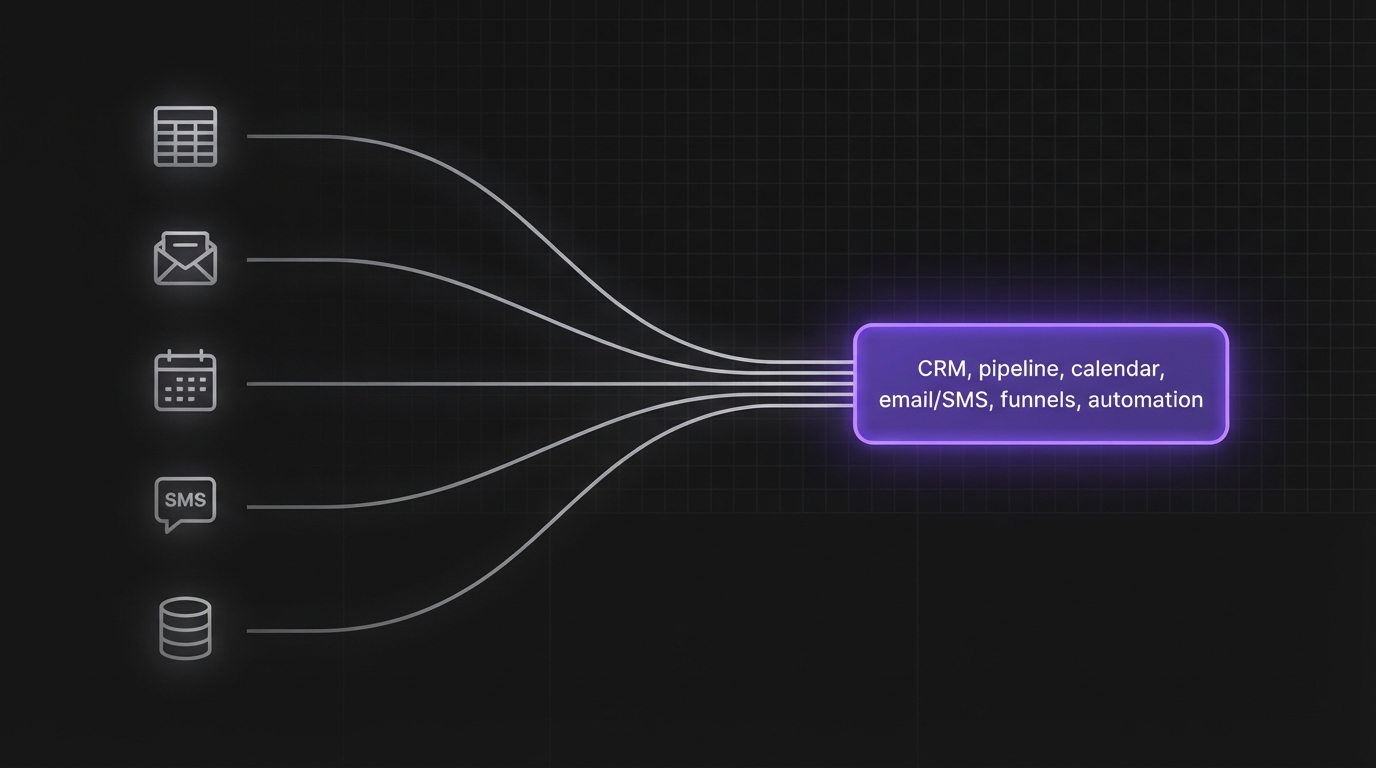
Is GoHighLevel Worth It? An Honest Read After Building It for 100+ Clients
A prospect asked us last week whether GoHighLevel was "just a HubSpot knockoff with a better sales page." We have built on GoHighLevel for five years, across more than a hundred client accounts in ecommerce, service businesses, coaching, accounting, and tech, and we still run our own agency operations on it. So we gave her the answer we give everyone: it depends what kind of business you are, and the platform will tell you which one within about sixty days.
Search "is GoHighLevel worth it" and the page one results split into two camps. One camp is an affiliate review with a "30-day free trial" button under a five-star verdict. The other is one operator who tried it for six weeks, hit a wall, and wrote three thousand words about leaving. Neither camp has watched it run across a hundred different businesses. We have, so here is the honest version: where it earns its price, where it breaks, and the specific question that tells you which side you will land on.
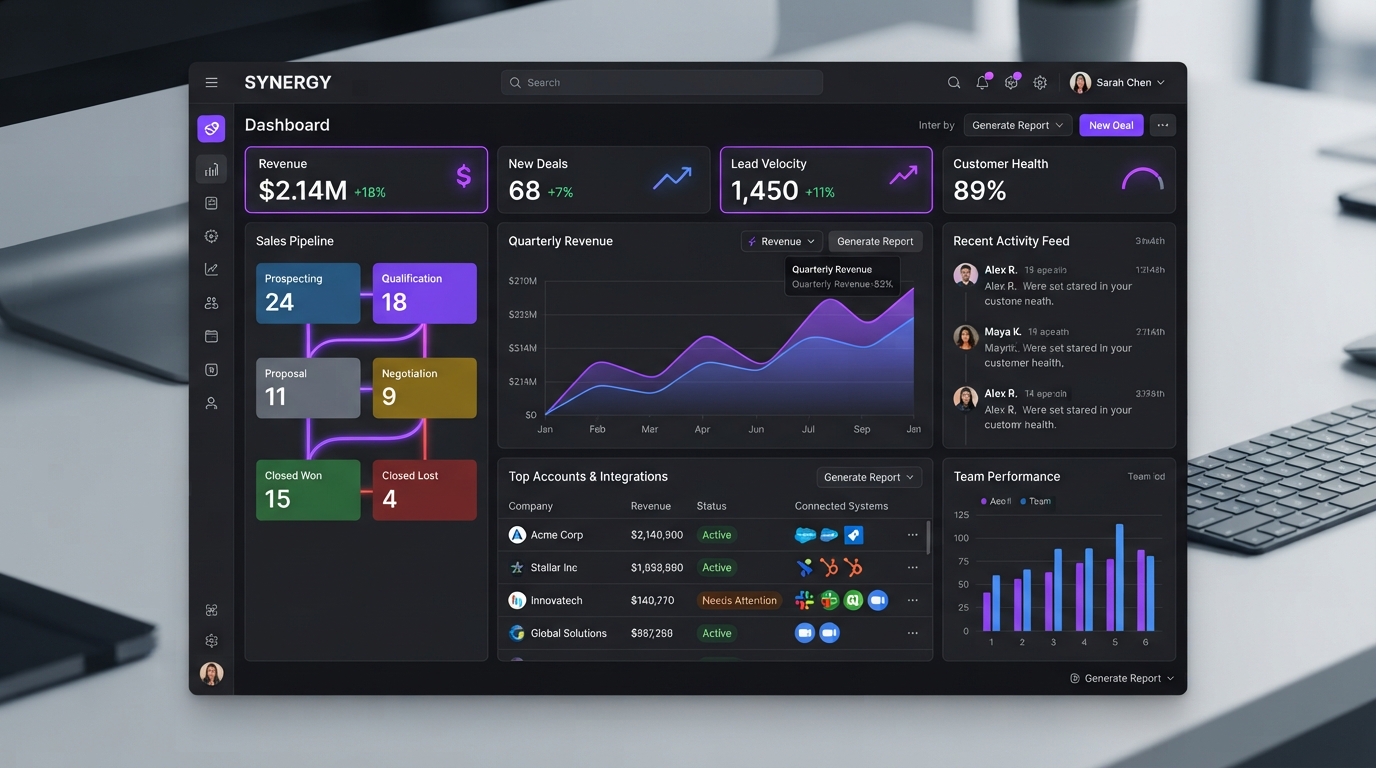
GoHighLevel bundles a CRM, pipeline and calendar system, email and SMS marketing, funnel and website builder, reputation management, and workflow automation into one platform, sold on tiered plans starting at $97 a month for the Starter plan and $297 a month for Unlimited, which adds unlimited sub-accounts and no-markup phone and email rebilling. That is current pricing as published on GoHighLevel's own pricing page, checked 27 August 2026. Usage based costs for SMS, email sending, phone numbers, and premium AI features sit outside the base plan and get billed separately, which is the detail most comparison posts bury in paragraph nine. If you want to look at the platform yourself, you can start a GoHighLevel account here.
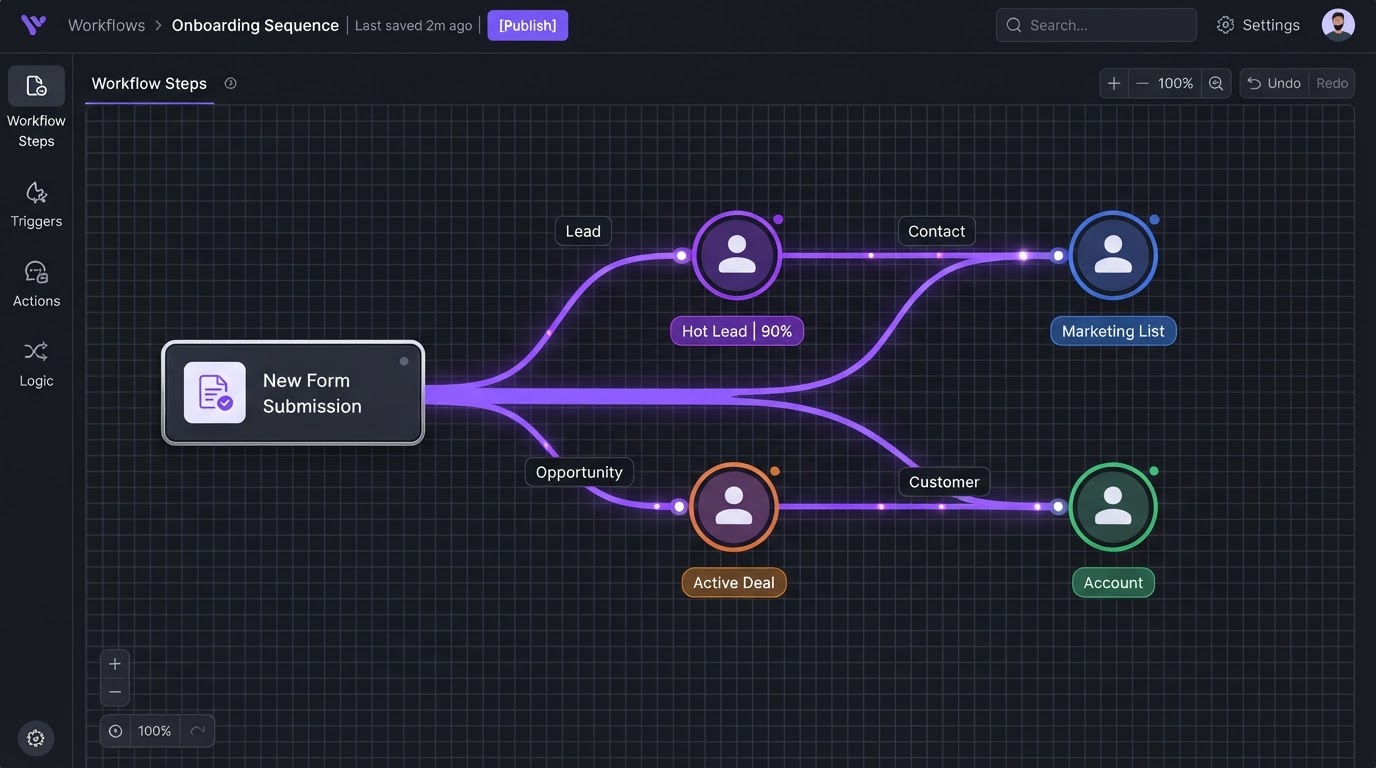
The platform was built for agencies managing multiple client accounts under one roof, not for a single business evaluating it as a standalone CRM. We run our own agency on the Starter plan and use sub-accounts the way the product intends: a connected growth system for CRM, sales pipeline, marketing automation, appointment booking, payments, reputation management, and reporting, rather than five tools stitched together with Zapier. That structural fit is the first thing to check before price ever enters the conversation. If you have already made that call and just need the build itself, how we route form leads in GoHighLevel walks through the specific workflow.
The honest win is consolidation, and it shows up fastest with a business that had disconnected tools before we touched it. A fitness coach client of ours was running intake by hand: a form, a shared inbox, someone checking it when they remembered. We built the intake form inside GoHighLevel with an internal notification and an automated reply on submission, and the mechanical result was what you would expect when a lead stops waiting for a human to notice them: fewer opportunities fell through the gap between form and follow-up, and the coach stopped losing people to whoever answered them first. We cannot publish the exact numbers behind that, most of our client agreements do not allow it, but the mechanism is the point: one system that already knew about the lead the moment it arrived, instead of three tools that each knew a third of the story.
That pattern repeats with any client running fragmented tools for CRM, scheduling, and follow-up messaging. GoHighLevel replacing four subscriptions with one, at $97 to $297 a month against what those four tools cost separately, is a real number worth running for your own stack before you decide anything else here. Most of what makes that consolidation actually work is the automation layer underneath it, not the CRM screen itself.
We are not going to pretend the platform has no edges, because every serious review of it that has actually used it says otherwise, and so do we.
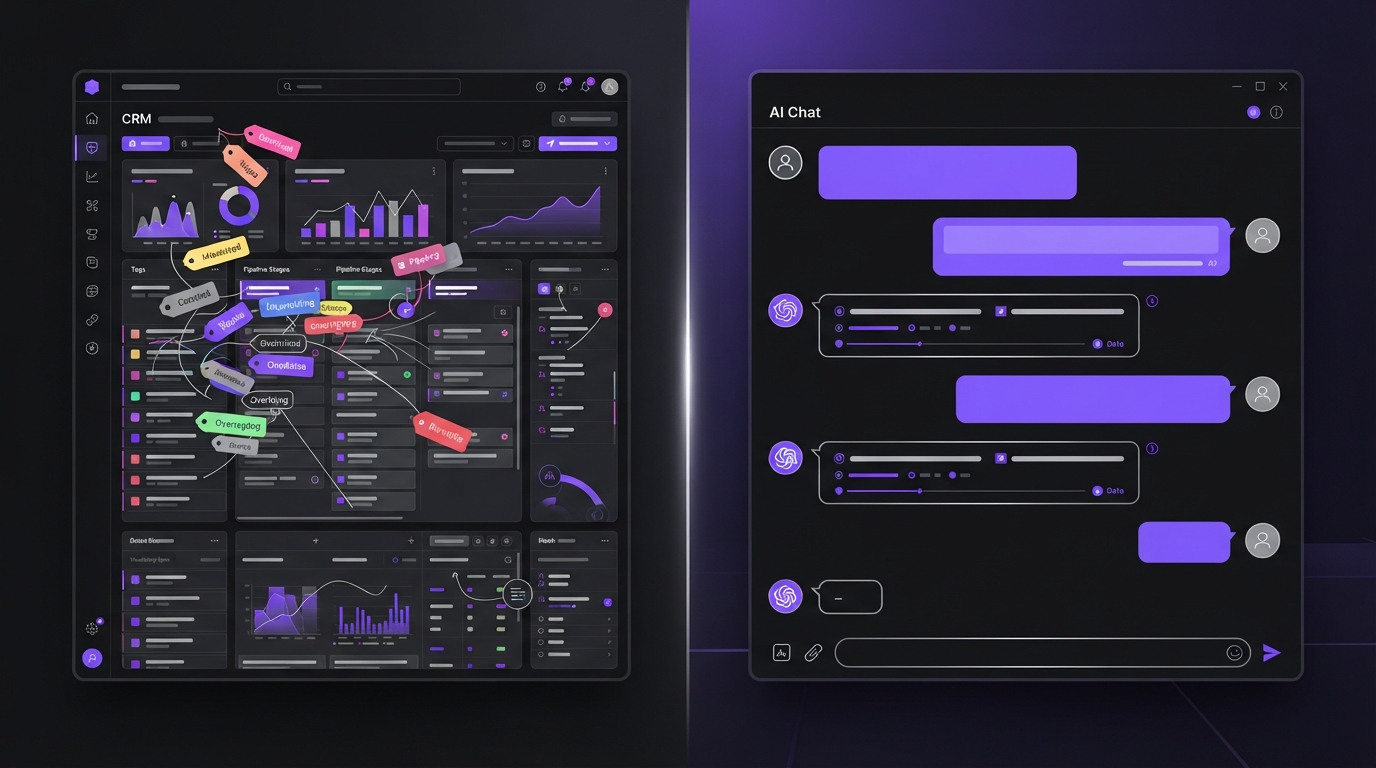
The interface punishes anyone who has not been trained on it. Settings for the same feature can live in two different menus depending on which product area you started from, and a client's marketing lead handed the login without an onboarding pass will quit inside a week and blame the platform. This is the single biggest predictor of a bad GoHighLevel outcome we have seen: not the software, the lack of a real handoff.
Email deliverability needs active management, not a plan upgrade. One widely read independent review from Millo documented open rates falling from the 35 to 40 percent range down to 9 percent after a migration onto the platform, alongside a reported incident of automated emails misfiring to the wrong recipients on consecutive days. We have not seen misfires at that scale on our own builds, but we have seen the deliverability drop when a client skips domain authentication and warm-up, which is not optional on any sending platform and is easy to skip when a sales rep tells you setup takes an afternoon.
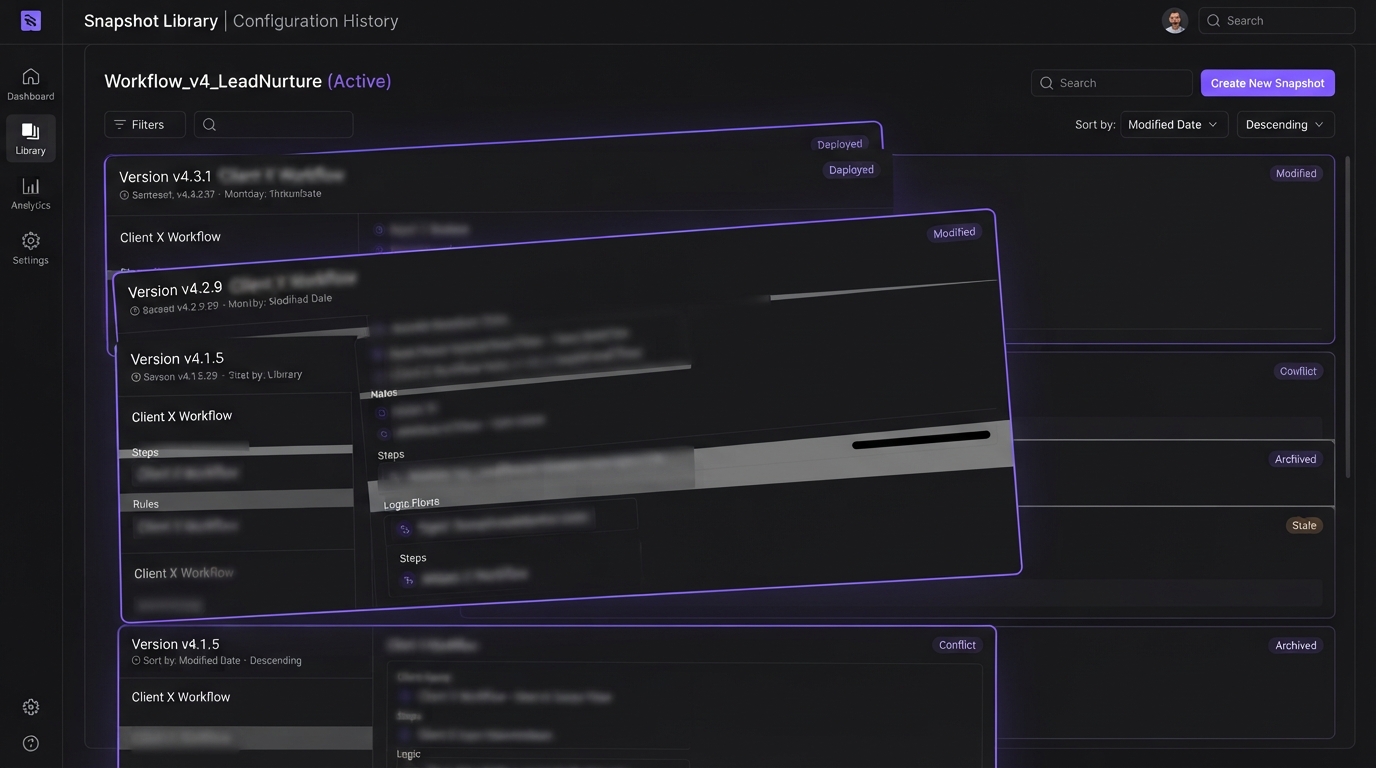
Sub-account sprawl becomes real technical debt. An agency running twenty, fifty, a hundred client sub-accounts without a naming convention and a snapshot strategy ends up with twenty slightly different versions of the same workflow, each one drifting further from the last update. We solved this the unglamorous way: one master snapshot per service line, one naming standard, updates pushed down rather than rebuilt sub-account by sub-account. Skip that discipline and the platform's flexibility turns into a maintenance bill nobody budgeted for.
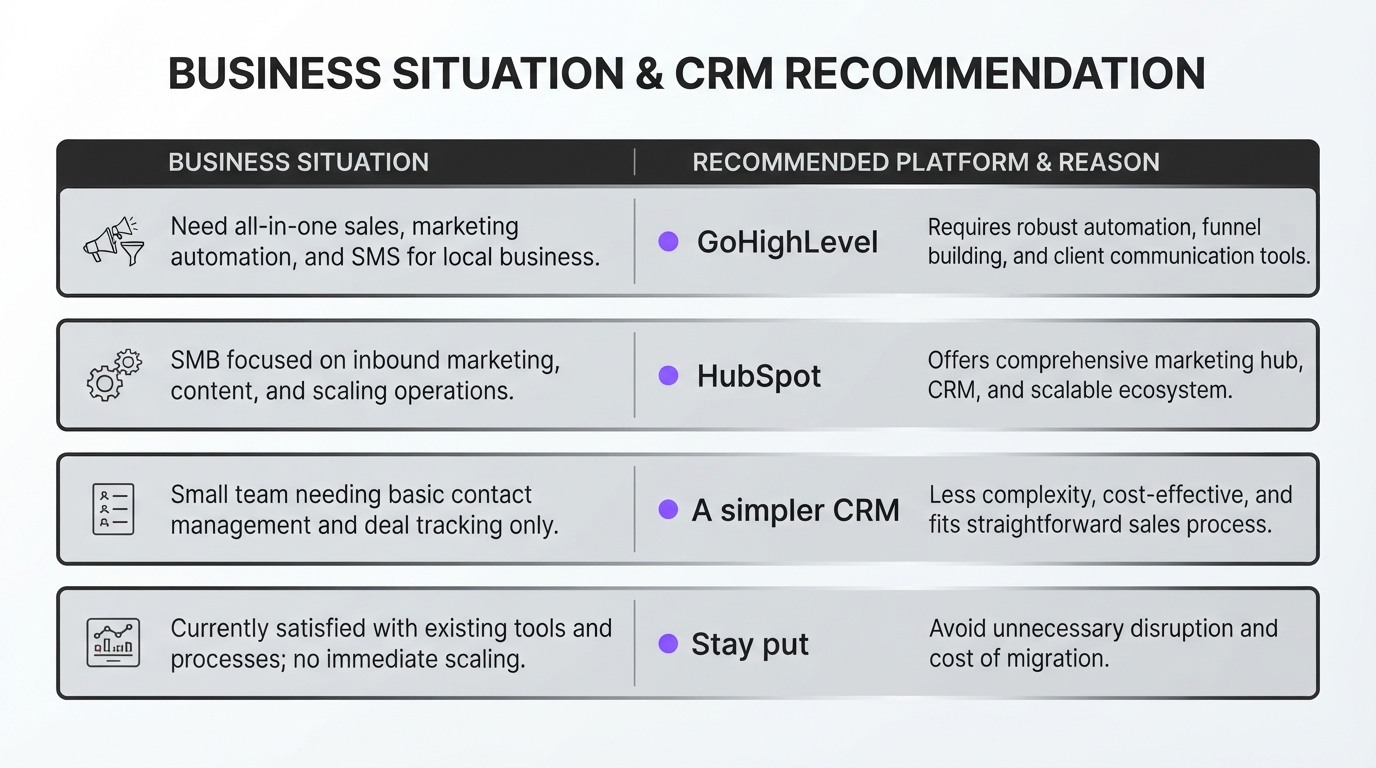
Your situation decides this more than any feature list does. Here is how we split it in practice:
| Your situation | What we would recommend | Why |
|---|---|---|
| Agency managing multiple client CRMs and marketing stacks | GoHighLevel | Sub-account architecture and white label mode exist for exactly this, and nothing else in this price range replicates it |
| Single business, inbound sales heavy, needs deep reporting and enterprise integrations | HubSpot | Stronger native reporting and a larger integration marketplace, at a materially higher price once you leave the free tier |
| Solo operator with under 200 contacts and simple follow-up needs | A simpler tool, not GoHighLevel | You will pay for sub-account and automation depth you will never use |
| Team already fluent in a different CRM with working automations | Stay put | Migration cost and the learning curve rarely pay back inside a year unless the current tool is actively broken |
A survey of agency Reddit threads by The Stack Insiders found the debate rarely splits on "is GoHighLevel good or bad." It splits on whether the account was configured properly, with satisfied operators reporting they invested 60 to 90 days in setup before judging it, and frustrated ones concentrated among rushed, incomplete onboardings. That matches what we see client side: the platform rewards the setup discipline in the section above, and punishes skipping it.
Worth it if you are an agency or a multi-location business that needs one system managing several accounts, and worth it if your team will actually get trained rather than handed a login. Not worth it if you are a solo operator with a short contact list who wanted something simpler, and not worth it if nobody on your team has the time to own deliverability and workflow hygiene, because the platform will not own it for you. If your situation is the second one, a custom CRM build sized to your actual contact volume is usually the better spend. That is the honest split, and it is a smaller, more specific answer than either the affiliate reviews or the six-week horror stories give you. If you have run it differently and landed somewhere else, we would like to hear where the split broke down for you. If the honest read landed you on the "worth it" side, you can get started with GoHighLevel here.
It depends on structure more than size. A small business running multiple locations, sub-brands, or client accounts benefits from the sub-account model. A single-location business with a short contact list often pays for depth it will not use and is better served by a simpler CRM.
An interface that scatters related settings across menus, email deliverability that needs active domain authentication rather than a plan upgrade, and sub-account sprawl for agencies without a snapshot and naming standard. None of these are dealbreakers, but all three need a plan before signup, not after.
Neither wins outright. GoHighLevel wins on price and agency sub-account architecture. HubSpot wins on native reporting depth and its integration marketplace once a business outgrows the basics. The right choice depends on whether you are managing one account or several.
The Starter plan is $97 a month, Unlimited is $297 a month with unlimited sub-accounts, and Agency Pro is $497 a month with SaaS mode, per GoHighLevel's official pricing page checked 27 August 2026. Usage based costs for SMS, email, phone numbers, and premium AI sit outside those base prices.
It can host funnels and simple sites through its builder, and that is enough for many service businesses. A brand that needs custom design, heavier content, or specific performance and SEO control usually still needs a dedicated site built separately and connected in.
If you are trying to figure out whether GoHighLevel fits your specific setup rather than the marketing page's version of your setup, book a strategy call. We will look at what you are running today, including whether ongoing CRM management is the actual gap, and tell you honestly whether switching is worth the disruption, including if the answer is no.

Written by
Benison David Sanchez is the CEO and AI Digital Marketing Strategist of BDGS Digital, a technology, CRM, automation, and growth company based in the Philippines and serving clients globally. He leads digital marketing and client acquisition for the company, and over five years has worked with more than 100 businesses across ecommerce, service, coaching, accounting, and technology, building connected growth systems where every campaign ties back to a larger system rather than running in isolation. He has personally configured GoHighLevel sub-accounts across every one of those industries, and he still finds a new way it breaks about once a quarter.
View all articles by BenisonWant help building this?
BDGS Digital builds connected growth systems across CRM, automation, marketing, and technology. Explore our services or book a strategy call.
Book a Strategy CallLET'S TALK
Book a strategy call and we'll map how your CRM, automation, marketing, and technology can work together as one connected system.